
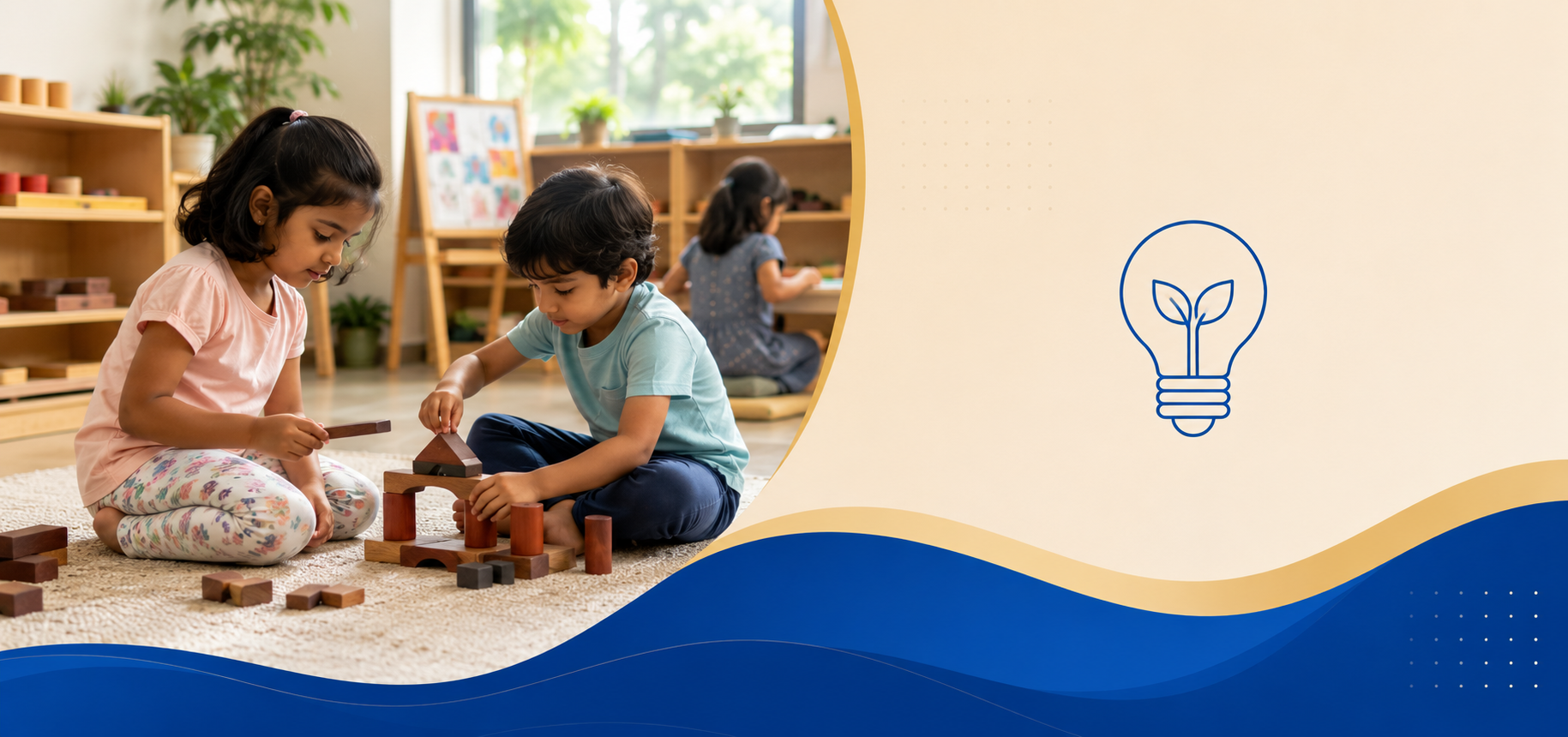
Ask a child to describe their favourite teacher, and the answer rarely involves someone who simply spoke well at the front of a room. It is usually someone who noticed them, who asked a question that made them think differently, or who let them struggle just long enough to work something out for themselves. That distinction, between delivering information and guiding discovery, sits at the heart of a genuine shift happening in how the best IB Schools in pune think about the role of a teacher.
The Lecturer Model and Why It Persists
The traditional image of a teacher, standing at the front of a classroom, delivering a fixed body of content to rows of students taking notes, exists for understandable reasons. It is efficient. It scales well across large classrooms. It gives a clear, measurable path from syllabus to examination.
For certain kinds of content, delivered at certain moments, direct instruction still has genuine value. A teacher explaining a new mathematical concept for the first time, or walking students through a historical timeline, is often the fastest and clearest way to build a foundation. The lecturer model is not without merit. The concern is what happens when it becomes the only model a school knows.
When lecturing is the default rather than one tool among several, students become accustomed to receiving knowledge rather than constructing it. They learn to wait for the answer rather than work toward one. Over years, this shapes not just what a student knows, but how they expect learning to happen at all, a pattern that tends to work against them the moment they leave a structured classroom environment.
What a Facilitator Actually Does
A facilitator does not simply talk less. The role is fundamentally different in what it asks of both teacher and student. Instead of delivering a conclusion, a facilitator designs a situation in which students are pushed to reach that conclusion themselves, through questioning, experimentation, discussion, or guided struggle.
This requires considerably more preparation, not less. A facilitator has to anticipate where students might go wrong, prepare questions that redirect thinking without giving away the answer, and remain comfortable with a classroom that looks, from the outside, less orderly than a traditional lecture. Silence while a student thinks, disagreement between students working through a problem together, an answer that is wrong but reasoned, these are signs the model is working, not signs it has broken down.
At a school genuinely committed to this approach, a facilitator also has to resist the urge to intervene too quickly. Watching a student struggle productively and knowing exactly when to step in and when to hold back is arguably the hardest skill a modern teacher has to develop.
Why This Shift Matters for Outcomes
The case for facilitation is not simply philosophical. Students who are regularly asked to construct their own understanding, rather than receive it fully formed, tend to retain concepts longer and transfer them more effectively to unfamiliar problems. They also develop a set of habits, comfort with ambiguity, willingness to attempt something without a guaranteed right answer, and the ability to learn from a mistake rather than simply correct it, that a purely lecture-based model rarely builds with the same consistency.
This matters particularly for families evaluating an international curriculum, since the entire premise of frameworks like the IB rests on students being capable of independent inquiry, extended research, and self-directed learning by the time they reach the senior years. That capability does not appear suddenly at seventeen. It is built, patiently, from the earliest years of school, by teachers who have deliberately taken on the role of facilitator rather than lecturer.
What This Looks Like in a Real Classroom
The difference between the two models is visible in small, specific moments. A lecturer, faced with a student who gives a wrong answer, corrects it and moves on. A facilitator asks the student to explain their reasoning, then asks the rest of the class whether they agree, turning a single mistake into a shared learning moment for everyone in the room.
A lecturer plans a lesson around the content to be covered. A facilitator plans a lesson around a question worth asking and treats the content as the material students will use to answer it. Over a full academic year, this difference compounds into two very different kinds of learners, one who has absorbed a great deal of information, and one who has genuinely learned how to think.
Seeing the Difference in Practice
Among schools exploring what a genuinely progressive model looks like, this shift from lecturer to facilitator is one of the clearest signals of whether a curriculum’s stated philosophy is actually being practised day to day. It is also one of the easier things for a parent to observe directly during a school visit. Watch how a teacher responds when a student gets something wrong. That single moment tends to reveal more than any prospectus.
At Heritage, this facilitative approach is embedded across every year level, not reserved for older students who are closer to university. If you would like to see what this looks like inside an actual classroom, we would be glad to show you. You can begin your IB school admission in Pune whenever you are ready, and our admissions team will guide you through the process.