
Beyond the Right Answer: The Power of Asking “How Do You Know?”
By Dimple Kumar– Upper Primary Program Leader
What changes when we ask a child, “How do you know?” instead of simply asking, “What is the answer?”
A Question That Makes Room for Learning
Sometimes, a small change in the questions we ask can make a profound difference in how a child experiences learning.
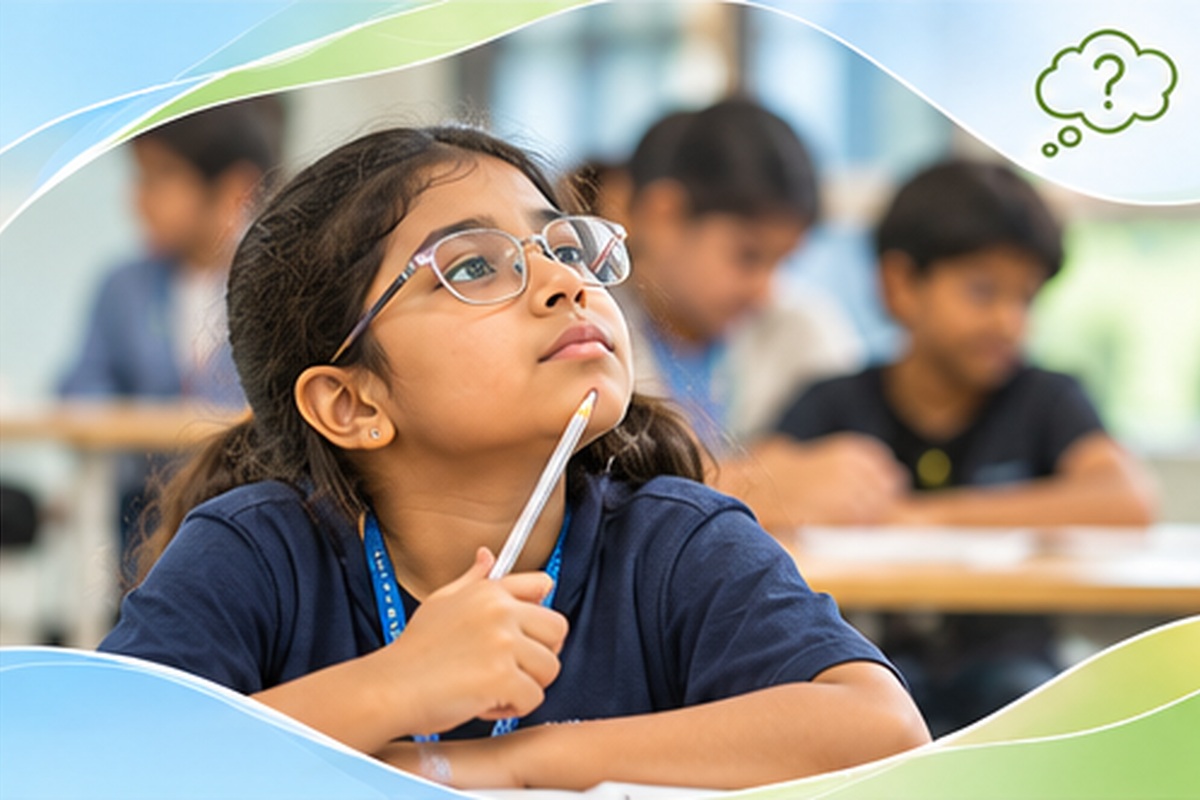
Imagine a child sharing an answer in class. The teacher could simply acknowledge it and move on. Instead, the teacher pauses and gently asks, “How do you know?”
For a moment, the child pauses to think. They put their reasoning into words, sketch a quick model, or describe a connection they made. What began as a simple check for understanding turns into a moment of genuine self-reflection making room for deeper thinking before moving on.
At an international school, this approach helps educators understand not just what students know, but also how they process information, make connections, and develop independent thinking skills.
The answer matters but so does the thinking that leads to it.
As educators and parents, we have the power to be intentional about the environment we create. When we move beyond asking what children know and become curious about how they know it, we help them recognize their own thinking as a vital part of learning.
Looking Beyond the Answer
When children are invited to explain their strategies, they make their thinking visible. They retrace their steps, put abstract concepts into words, and reflect on their choices. For teachers, these explanations offer clear insights into a child’s understanding and highlight where extra support or challenge is needed.
For the child, explaining an idea builds metacognition the ability to think about their own thinking. They begin to notice how they arrive at an idea, reflect on their strategies, and adjust when needed. The willingness to revisit an idea, refine a strategy, and deepen understanding reflects our Dharmic Value of Excellence.
From Thinking to Learner Agency
When children feel their ideas are taken seriously, their self-perception shifts.
They discover they can make deliberate choices about their learning, leaning into their strengths and selecting strategies that work best for them. This is the foundation of agency-children taking an active, self-directed role rather than waiting for instructions or validation.
This everyday practice directly nurtures the PYP Approaches to Learning (ATL) skills:
- Thinking Skills: Noticing patterns and analyzing relationships.
- Communication Skills: Articulating complex reasoning clearly.
- Collaboration Skills: Actively listening and building on classmates’ ideas.
- Self-Management Skills: Persisting and pivoting when an initial strategy fails.
This environment honors our Dharmic Values of Freedom and Authenticity. Freedom flourishes when children are given room to explore multiple paths, while Authenticity grows when they feel safe to share emerging ideas-even when uncertain.
When mistakes are treated as natural learning steps, children develop confidence, resourcefulness, and resilience.
When One Child’s Thinking Opens a Door for Another
Consider a Grade 3 classroom exploring different ways to make 20:
- One child adds 15+5
- Another uses doubling, recognizing that 10 + 10 makes 20.
- A third visualizes the combinations on a number line.
Each child arrives at the same final result, yet the cognitive path taken by each is unique.
As children build confidence in their own strategies, an exciting next step unfolds: they begin to learn from one another.
A student who used standard addition might spot a numerical pattern through a peer’s explanation, while another realizes a visual number line makes the relationship clearer. They quickly learn that there is rarely a single path to a solution, and that listening to a classmate can broaden their own understanding. What began as a simple check for understanding transforms into an opportunity to explore ideas, listen deeply, and discover something new together.
This practice sits at the heart of the IB Primary Years Programme (PYP). During an inquiry, children explore varying explanations for why things happen, how communities function, or how environments interact. By defending their ideas with evidence and listening to others, they learn to analyze debates and remain open to new possibilities.
The goal is not to suggest every answer is equally correct, but rather to teach children how to support their ideas with reasoning and adapt when new information emerges.
Every Response Has a Story to Tell
Behind every answer lies a web of connections made, patterns noticed, and strategies tested.
Listening to diverse approaches is a direct expression of our Dharmic Values of Respect and Attentiveness. When children listen carefully and value a peer’s contribution, they experience firsthand how understanding grows through dialogue. Welcoming different voices also strengthens Inclusion, ensuring every child feels valued in the learning community.
Simple Prompts to Use at Home and in School
We don’t always need to ask more questions-often, we just need to ask a different question and give children space to respond.
Try these reflection prompts:
- “What helped you decide on that strategy?”
- “Can you show me another way to solve this?”
- “What did you notice when you listened to your classmate?”
Equally important is how we listen. If every explanation is instantly judged as right or wrong, children learn to seek adult approval rather than genuine understanding. But when we listen with authentic curiosity, we signal that the thinking process itself is valuable.
The Real Shift
The ultimate shift happens when a child stops viewing learning as a quest for the answer the adult wants to hear, and starts viewing it as an ongoing journey of exploring, reflecting, and connecting.
The next time a child shares an answer, pause before moving on. Give them time, listen closely, and ask:
“How do you know?”
In that simple moment, you tell the child that their thinking matters, their voice deserves to be heard, and they are fully capable of navigating their own path toward understanding.